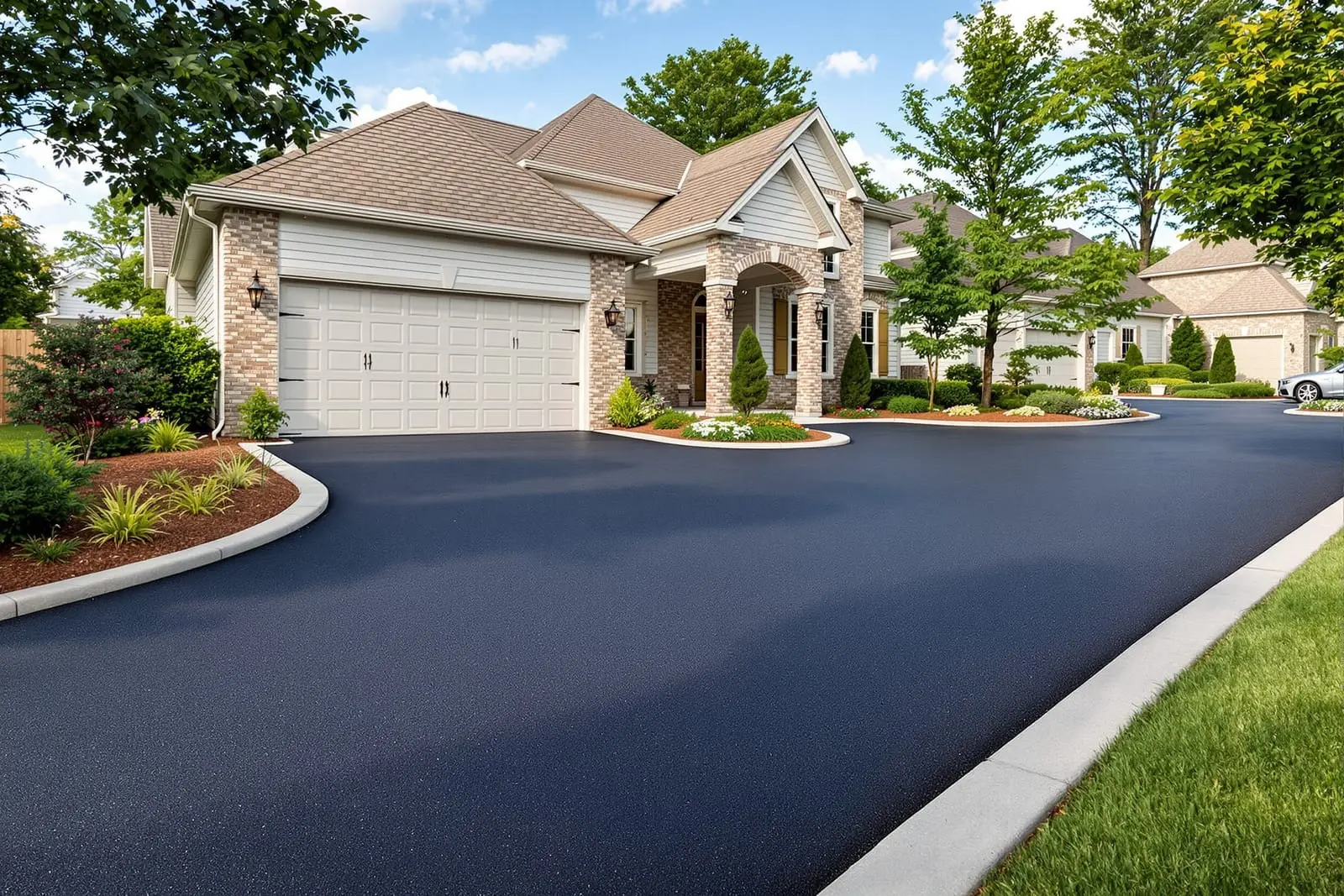
Support heavy traffic with industrial asphalt paving in Portland, OR. We design and build thick, reinforced pavements for trucking yards, loading docks, and industrial facilities. Our team accounts for axle loads, turning movements, and drainage so your surface resists rutting and premature failure.
Prestige Asphalt Portland provides professional industrial asphalt paving throughout Portland, OR and the surrounding area. Our licensed, insured crew delivers safe, clean, on-time work with a free estimate before anything begins. Call (971) 715-4815 or request your free quote.
Industrial Asphalt Paving for Portland’s Hard‑Working Sites
Industrial asphalt paving in Portland has to handle more than just parked cars. Heavy forklifts, constant truck traffic, freeze–thaw cycles, and regular rain all push pavement to its limits. Prestige Asphalt Portland focuses on designing and building pavements that match those real site conditions, not a one‑size‑fits‑all parking lot spec.
We work with distribution centers, freight yards, manufacturing plants, food processors, recycling facilities, transit yards, and port‑related operations in Portland and the surrounding industrial corridors. Every project starts with how you actually use the surface: axle loads, turning patterns, staging areas, and how often you expect loading or unloading. That use profile is what drives the pavement structure we recommend, from rock base depth to asphalt mix type.
Our goal is to build industrial pavement that will last under your real traffic, minimize shutdown time, and stay safe and usable in Portland’s wet winters. That means careful planning, straightforward guidance on options and cost, and paving work scheduled and executed around your operations, not the other way around.
Site Evaluation and Pavement Design Built Around Your Loads
Effective industrial asphalt paving starts long before the first truck shows up. Prestige Asphalt Portland begins with a site walk and conversation with your operations staff. We map out truck paths, dock approaches, forklift lanes, container storage zones, and any tight turning areas that tend to rut or crack first. We also review any existing pavement failures so we do not repeat past mistakes.
We then look at subgrade conditions. In many industrial areas around Portland, especially near the river or older fill sites, soils can be soft or inconsistent. We use test pits or probing to check soil stability and moisture. Where needed, we recommend undercutting weak areas, adding crushed rock, or using geotextile or stabilization fabric to keep the base from pumping and shifting.
Pavement design is based on actual or projected truck counts, axle loads, and the percentage of slow turning or braking. Heavy‑duty areas such as loading docks, fuel islands, and trash compactor pads often require thicker asphalt sections and sometimes multiple lift types, for example a dense base lift with a high‑stability surface mix. For customers who need documented engineering, we can coordinate with a local pavement engineer to provide stamped sections that meet your company or insurer requirements.
Subgrade, Drainage, and Base Preparation in Portland Conditions
In our climate, with months of rain followed by dry spells, poor drainage is the fastest way to destroy industrial asphalt. Prestige Asphalt Portland treats water control as the backbone of every heavy‑duty design. Before paving, we verify that water has a clear path away from the pavement through slope, trench drains, catch basins, or swales.
If your site already has drainage structures, we check grates, frame heights, and connections. Manholes and catch basins are adjusted so finished asphalt does not create birdbaths around them. Where existing drainage is inadequate, we can add trench drains at dock doors, regrade problem areas, or rebuild deteriorated catch basin collars so the new pavement stays tight and supported around them.
Base preparation typically includes proof rolling with a loaded truck or roller to locate soft spots. Any pumping or deflection marks areas that need additional rock or undercutting. In many Portland industrial yards we specify a thicker compacted crushed rock base than you would see in retail lots, often 8 inches or more, to handle repetitive heavy loads. Proper compaction in multiple lifts is critical, and our crews document compaction passes so we know the base is ready before the first ton of asphalt is placed.
Industrial Asphalt Mixes, Lift Thickness, and Placement
Not all asphalt is the same. For industrial asphalt paving, we select mixes and lift thicknesses that prioritize load carrying and resistance to rutting. Prestige Asphalt Portland works with local plants to specify mixes that use the right aggregate size and gradation for your application, often a coarser, high‑stability mix in the deeper lifts and a tighter surface mix on top.
In heavy‑duty sections we commonly install asphalt in two or three lifts. For example, a distribution yard might receive a 3 inch base lift and a 2 inch surface lift, over a robust rock base. Each lift is placed with a paver, then compacted with steel and pneumatic rollers while temperatures are in the optimal range. This step is critical in our cooler shoulder seasons; if mats cool too fast, density suffers and the pavement will not last.
We pay special attention to joints, transitions, and high‑stress zones. Longitudinal joints are offset from wheel paths where possible and are compacted carefully so they do not become early crack lines. Around dock plates, tight turns, and entrance aprons, we may thicken the asphalt section or change the joint layout to avoid early shoving or rutting.
Where specific performance or permitting standards apply, such as for bus yards or municipal facilities, we can follow published heavy‑duty sections or coordinate with your engineer to match existing standards.
Cost Drivers, Phasing, and Working Around Your Operations
Industrial asphalt paving is a significant capital project, and Portland businesses usually need to keep freight and production moving during the work. Prestige Asphalt Portland builds cost and operational planning into our proposals so there are fewer surprises once crews mobilize.
Major cost drivers include required pavement thickness, the condition of your existing base or subgrade, drainage upgrades, and how much phasing or night work is needed to keep you open. Rebuilding soft subgrade or adding drainage can increase cost, but often saves money long term by preventing repeated patching and downtime. We explain where spending a little more upfront will truly add life and where it will not.
For active sites, we commonly phase projects: for example, paving one half of a truck court while the other half stays open, then switching sides once the first section cools and can carry traffic. Night or weekend work is available when needed, which can be especially helpful for warehouses with heavy weekday schedules. Traffic control plans, temporary striping, and clear signage are built into the plan so your drivers and staff know exactly how to move through the site during construction.
Common Industrial Pavement Problems and How We Address Them
Portland industrial pavements tend to fail in predictable ways. Constant heavy loads, moisture, and winter freeze–thaw cycles lead to rutting in drive lanes, fatigue cracking near docks, and edge failures where trucks cut corners. Prestige Asphalt Portland uses what we see during evaluation to correct the underlying causes rather than just resurfacing over symptoms.
If rutting occurs in wheel paths, that often means the asphalt was too thin or the mix too soft for the loads. Our fix may include milling out those lanes, rebuilding the base if needed, then replacing with a thicker, stiffer industrial mix designed for slow heavy traffic. For alligator cracking, we examine layer thicknesses and subgrade support; full‑depth repair is usually the right answer in those zones so the new surface is not sitting on failed material.
Drainage‑related damage is also common. Standing water, clogged drains, or negative slopes can cause surface raveling and early cracking. We correct grades where feasible, tie new pavement cleanly into existing structures, and may recommend regular cleaning schedules for trench drains or inlets as part of your maintenance plan. Our aim is to leave you with pavement that not only looks new but is configured to handle your real‑world operating conditions.
Maintenance, Seasonal Timing, and Why Local Experience Matters
Industrial asphalt paving is an investment that should serve your facility for many years if it is maintained wisely. Prestige Asphalt Portland provides maintenance guidance specific to your site conditions and budgets. For example, we may suggest heavier maintenance focus on high‑stress dock approaches and turn lanes, with a lighter touch on storage areas that see static loading only.
Sealcoating is not always appropriate for heavy industrial yards that see constant turning or chain use, so we discuss where it makes sense and where it can actually create tracking or peeling issues. More often, timely crack sealing and localized patching, combined with keeping drains clear and avoiding overloaded or off‑design areas, will give you the best return on maintenance dollars.
Portland’s climate also affects scheduling. The best paving windows for heavy‑duty work are typically late spring through early fall, when temperatures and ground moisture support good compaction and curing. We can still pave in cooler months when necessary, but we will be candid about any limitations so you understand the tradeoffs. Planning ahead for large projects allows us to secure optimal plant times, coordinate with your internal shutdowns, and deliver industrial asphalt paving that performs reliably in our Northwest weather.
“
Professional industrial and heavy-duty asphalt paving, done right the first time, quality materials, honest pricing, and results that last.
Prestige Asphalt Portland
Industrial and Heavy-Duty Asphalt Paving Across Our Service Area