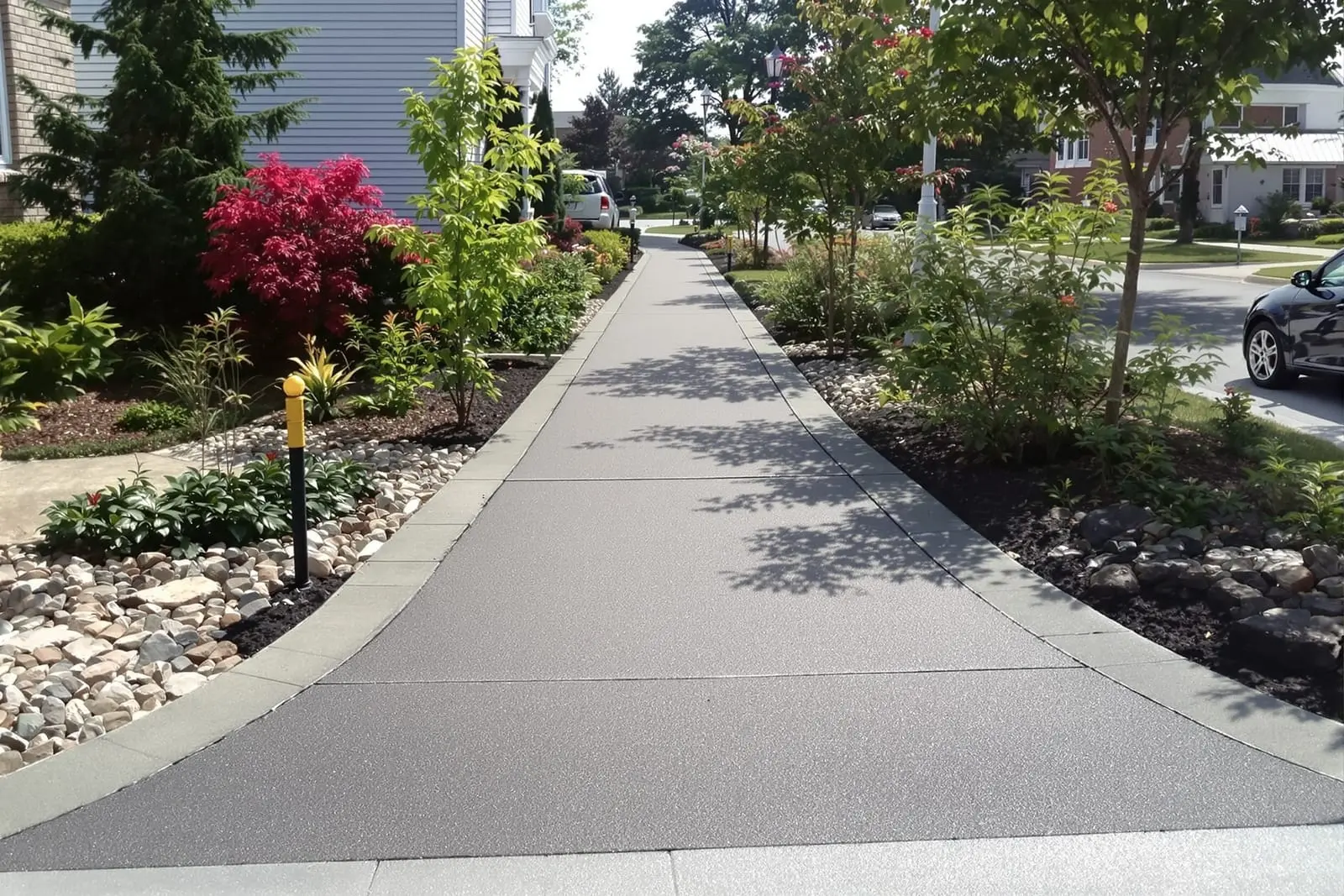
Connect spaces safely with asphalt sidewalks in Portland, OR. We build and resurface paths and multi use trails for schools, parks, and commercial sites. Our team designs widths, slopes, and transitions that meet accessibility needs while providing a smooth, low maintenance walking and biking surface.
Prestige Asphalt Portland provides professional asphalt sidewalks throughout Portland, OR and the surrounding area. Our licensed, insured crew delivers safe, clean, on-time work with a free estimate before anything begins. Call (971) 715-4815 or request your free quote.
Asphalt sidewalks, pathways, and trails built for Portland conditions
In Portland, sidewalks and pathways live through constant rain, tree roots, and freeze-thaw cycles. At Prestige Asphalt Portland, we design asphalt sidewalks, walking paths, and multi-use trails that match how your property is actually used, not just how it looks on a drawing.
For residential sidewalks and garden paths, we look at how you move through the space. That might mean a straight walk from driveway to front door, a wider landing at steps, or a curved path that keeps people away from soggy lawn areas. For commercial sites and HOAs, we focus on predictable foot traffic, delivery routes, ADA access, and how the path connects to existing city sidewalks or parking lots.
Our local crews pay close attention to Portland-specific issues like heavy shade that slows drying, areas where moss usually grows, and typical root zones for maples, firs, and street trees. We plan drainage, thickness, and base depth around those realities so your asphalt sidewalks and trails do not heave, rut, or grow slick with moss the first winter.
Every project starts with a walk-through on site. We mark drainage patterns, utilities, root zones, and any spots where water already pools. That site visit drives the design, the cost, and the long-term performance of your walkway or trail.
How we build long-lasting asphalt sidewalks and paths
The lifespan of an asphalt sidewalk or trail is mostly decided before any asphalt hits the ground. Prestige Asphalt Portland follows a step-by-step process to avoid the common failures we see around the city.
1. Layout and excavation. We paint the path or sidewalk alignment on the ground, then cut and remove sod, old concrete, or failing asphalt. For typical pedestrian use, we excavate 6 to 10 inches below finished grade, more in soft or saturated soil. We stockpile reusable clean rock and haul off unsuitable material.
2. Subgrade shaping and compaction. Portland soils are often a mix of clay and fill. We grade the subgrade to create a slight crown or cross-slope so water runs off the surface, then compact it with a plate compactor or roller. Soft spots get undercut and replaced with rock. Skipping this step is what leads to dips and puddles later.
3. Rock base installation. We install 4 to 8 inches of compacted crushed rock, thicker in known wet zones or along driveways where vehicles might occasionally cross. For trails in greenbelts, we may use an open-graded base that drains better so the path does not pump water and mud to the surface every winter.
4. Edge definition and forms. For sidewalks next to lawns, we may install a narrow edge band of compacted rock or set a concrete or steel edge where a crisp line is desired. Along slopes, we sometimes use low berms or small retaining edges to keep the base and asphalt from creeping.
5. Asphalt placement and compaction. For asphalt sidewalks used only by pedestrians, we typically install 2 to 3 inches of hot mix asphalt after compaction, built in one or two lifts depending on design. For mixed-use paths and bike trails, we often increase thickness. We place the asphalt at the correct temperature, shape the surface for drainage, then compact it with a roller to lock the aggregate together.
6. Joints and transitions. Where your new asphalt sidewalk meets a city sidewalk, driveway, or curb, we feather or saw-cut the joint so there is no trip edge and so water does not seep under the surface. For ADA access points, we keep slopes within code and plan for tactile warning panels if required.
By the time we are done, you have a solid, compacted structure under your asphalt, not just a black strip on dirt.
Design options, finishes, and accessibility for Portland properties
Asphalt sidewalks and trails are more customizable than most people realize. Prestige Asphalt Portland helps you choose details that fit both aesthetics and function.
Width and alignment. Residential sidewalks are often 3 to 4 feet wide, while public or multi-use paths may be 6 to 10 feet or more. In Portland, we frequently widen sections near driveways, mailboxes, or building entries where people tend to gather or pass each other.
Surface texture. A tight, well-rolled finish is standard for sidewalks and bike paths. In shaded or moss-prone areas, we may recommend a slightly more textured finish to improve grip. We also look at how the sun moves around your property to anticipate where icing is most likely and adjust slope and drainage accordingly.
Curves and edges. Asphalt forms smooth curves cheaply compared to concrete. In yards and parks, this allows us to route paths around trees, gardens, or play areas without awkward joints. Edges can be tight and straight for a clean commercial look or gently rounded into lawns and planting beds.
ADA and mobility. Portland has strict accessibility standards, and many older sidewalks and pathways do not meet them. When we build or replace asphalt sidewalks, we check slopes, cross slopes, and transitions to entries or ramps. We aim for a smooth roll for wheelchairs, strollers, and walkers, including at driveways and parking lot crosswalks.
Color and striping. Standard asphalt is black, then we can add paint striping for shared-use trails, centerlines, or bike route markings. In some private settings, we have installed colored seal coats on asphalt paths to create visual separation between walking and biking areas.
Because we work across the Portland metro area, we are familiar with city, county, and HOA expectations. We can coordinate with your designer or property manager so your asphalt pathways match the broader site plan.
What affects cost and common issues we solve
Path and sidewalk pricing is not one-size-fits-all. Prestige Asphalt Portland is upfront about what really changes the cost so you can plan and prioritize.
Main cost drivers include length and width, thickness of asphalt and base rock, access for equipment, and site conditions. A simple, straight front-walk replacement in an established neighborhood with good access is on the lower end. A winding trail behind a building, with limited access and wet soil, costs more because we need more prep work, rock, and labor.
Drainage is a big factor in Portland. If water already pools in your yard or along the side of a building, we may recommend underdrains, ditches, or added base depth. These changes cost more upfront but prevent the surface from cracking or heaving in a few winters.
Tree roots are another local issue. Instead of grinding roots flush and hoping for the best, we look at the species and distance from the trunk. Sometimes we shift the path a bit, sometimes we thicken the base and install a root barrier to slow intrusion. We explain the options and costs before we dig.
Common problems we routinely fix include:
• Sunken or uneven sections. Usually caused by poor base prep or organic soil. We cut out the failed area, rebuild the base, then patch with new asphalt tied into the surrounding surface.
• Slick, mossy surfaces in shade. In many older asphalt sidewalks and paths, water sits with no place to go. We improve slope, add drainage where possible, and can apply seal coats that help resist water and moss buildup.
• Edges that crumble into lawns or beds. This typically happens when asphalt was placed directly on soil with no base or confinement. We rebuild the base and, if needed, add a narrow border so mowers and foot traffic do not break the edge.
By talking through these issues during the estimate, we can give you a clearer price range and a plan that matches your budget and how you actually use the space.
What to expect when you hire Prestige Asphalt Portland
Working with Prestige Asphalt Portland is straightforward. We serve homeowners, HOAs, schools, churches, and businesses throughout Portland and nearby communities.
Estimate and planning. We visit your site, listen to how you want to use the sidewalk or trail, then measure and evaluate drainage, soil, roots, and access. You receive a written proposal that spells out base depth, asphalt thickness, and any drainage or accessibility improvements.
Scheduling and prep. Once you approve the plan, we schedule a clear start date. Before we arrive, we ask you to move vehicles, clear personal items along the route, and mark any private irrigation lines if you know their location. We call in utility locates as required.
Construction. Typical residential sidewalk or path projects take 1 to 2 days, longer for more complex or longer trails. We remove old materials, shape and compact the base, then pave and roll the asphalt. Our crew keeps the site as tidy as the work allows so your property does not feel like a construction zone longer than necessary.
Curing and use. Asphalt sidewalks and paths are usually walkable within a few hours, but we recommend keeping heavy items and vehicles off for several days while the surface cools and hardens. We provide simple care instructions tailored to Portland weather, such as how to deal with moss, snow, and early hairline scuffs.
Follow-up and maintenance. We are available after the job to answer questions and discuss periodic maintenance like crack sealing or seal coating for high-use paths. Because we are local, you know who to call if you need an extension, a new spur path, or a repair after utility work.
If you are considering new asphalt sidewalks, pathways, or trails, or you are tired of dealing with uneven or muddy walkways, Prestige Asphalt Portland can walk the site with you and lay out realistic options that suit both your property and Portland’s climate.
“
Professional asphalt pathways, sidewalks, and trails, done right the first time, quality materials, honest pricing, and results that last.
Prestige Asphalt Portland
Asphalt Pathways, Sidewalks, and Trails Across Our Service Area