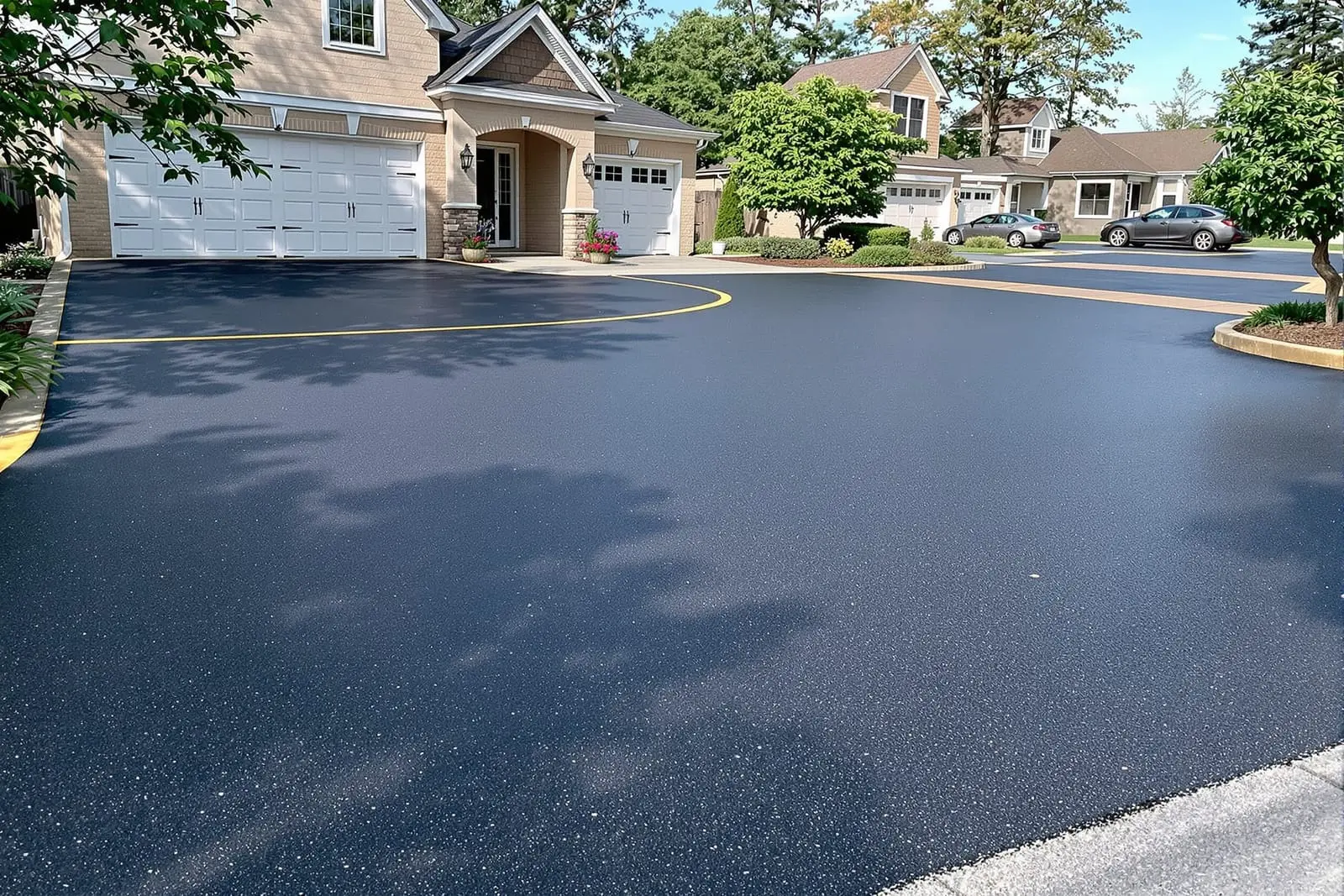
Upgrade aging pavement without full demolition using commercial asphalt resurfacing in Portland, OR. We repair problem areas and install overlays that strengthen lots, drive lanes, and loading zones. This cost effective option improves appearance and ride quality while extending the life of your existing asphalt.
Prestige Asphalt Portland provides professional commercial asphalt resurfacing throughout Portland, OR and the surrounding area. Our licensed, insured crew delivers safe, clean, on-time work with a free estimate before anything begins. Call (971) 715-4815 or request your free quote.
Commercial Asphalt Resurfacing & Overlays for Portland Properties
If your parking lot or private roadway is rough, cracked, or faded but the base is still solid, commercial asphalt resurfacing is usually the smartest way to bring it back. Prestige Asphalt Portland focuses on extending the life of existing pavement for local businesses, not just replacing it.
Resurfacing (also called an asphalt overlay) means we keep your current asphalt structure, repair and prepare it carefully, then install a new layer of hot mix asphalt on top. The result is a fresh, smooth, dark surface without the cost and disruption of full removal and replacement.
In Portland, this is especially useful for shopping centers, office parks, industrial yards, HOAs, schools, and churches where you cannot shut everything down for a week. We schedule work around your busiest hours, phase the lot so tenants and customers still have access, and coordinate with property managers so there are no surprises.
Because we work only in the Portland area, we design every resurfacing project with our climate in mind. That means planning for constant moisture, frequent freeze-thaw cycles in winter, and studded tire wear. The goal is not just a better looking surface today, but a pavement structure that can handle five to fifteen more years of our local conditions when properly maintained.
How Commercial Asphalt Resurfacing Actually Works
A quality overlay is all about the prep work. When Prestige Asphalt Portland evaluates a lot, we first determine if the base is sound enough for resurfacing. We walk the site, probe soft spots, and look for signs of base failure like deep alligator cracking or widespread depressions. If more than about 25 to 30 percent of the area has structural failures, we will talk honestly about whether full reconstruction makes more financial sense.
For projects that qualify, we typically follow these steps:
1. Detailed inspection and measurements. We measure thickness, slopes, and drainage paths, and we note every crack, pothole, and failed area. This lets us give you a line item estimate, not a guess.
2. Structural repairs (patching). Any area where the asphalt is completely broken or pumping water must be cut out. We saw cut the perimeter for clean edges, excavate failed material, compact the base, and install new hot mix asphalt level with the surrounding pavement. Skipping this step is the main reason cheap overlays fail early.
3. Milling and edge transitions. To keep curbs, drains, and entries at the right height, we often mill (grind) the existing asphalt at tie-in points and sometimes across the whole surface. For commercial drive entrances, ADA ramps, and loading docks, we adjust milling depth so finished grades meet code and vehicles do not bottom out.
4. Crack repair and surface prep. Wider cracks are routed or cleaned, then filled with hot rubberized material. We clean the surface mechanically, blow debris off with high CFM blowers, and sometimes apply a tack coat, a thin bonding layer that helps the new asphalt adhere to the old.
5. Installing the overlay. We use commercial grade hot mix asphalt from local Portland plants, typically with 3/8 inch aggregate for parking lots and sometimes 1/2 inch for heavier traffic lanes. Pavers place the new mat to a controlled depth, usually 1.5 to 2 inches for lots and 2 to 3 inches for drive lanes or private roads, followed by multiple passes with steel drum and pneumatic rollers for proper compaction.
6. Striping and finishing. After cool down, we repaint stalls, arrows, ADA markings, and fire lanes using ODOT compliant traffic paint. If needed, we add wheel stops, signage, or minor concrete work so the finished site is clean and compliant.
Every one of these steps affects how long your resurfacing will last. We walk you through them at the start so you know what you are actually buying, not just a thickness number on a proposal.
Local Factors That Shape Your Project and Cost
Portland is hard on asphalt. Constant rain, shade from trees, and freeze-thaw cycles can shorten the life of an overlay if it is not designed correctly. Prestige Asphalt Portland adjusts mix selection, thickness, and drainage details based on what we see on your specific site.
Here are some of the main factors that affect cost and scope:
Subsurface condition. If your lot has a good base and only surface cracking and raveling, resurfacing is straightforward and economical. If we find saturated base, pumping water, or widespread alligator cracking, we will recommend more extensive patching or partial reconstruction in those zones before we overlay. That repair work adds cost, but without it the overlay would fail early.
Traffic type and weight. A small office lot with passenger cars can use a slightly thinner overlay than a trucking yard, warehouse, or grocery store delivery lane. Where semi trucks, garbage trucks, or regular delivery vehicles turn and brake, we usually recommend thicker asphalt or a stronger mix design. We will ask detailed questions about how your property is actually used so the design matches reality.
Drainage and slopes. In Portland, standing water is the enemy. Puddles that do not drain away will speed up cracking and potholes. Before resurfacing, we check slopes toward catch basins and swales, evaluate clogged drains, and correct low spots when we patch or mill. Sometimes adding or adjusting a catch basin is the most important part of the job.
Lot layout and access. Resurfacing an active retail center is very different from resurfacing a fenced industrial yard. If your tenants operate 24 hours, we may need night or weekend work, phasing, and extra traffic control, which affects labor cost. For tight downtown or close-in Eastside sites, mobilization can be higher because of staging and equipment constraints.
Local materials and specs. Using local asphalt plants in or near Portland keeps haul times short so the mix stays at the right temperature for compaction. It also lets us match or exceed city and county standards where required, such as on private roads that might eventually be dedicated to the city.
Common Issues, Lifespan Expectations, and Maintenance
Commercial asphalt resurfacing is not a band aid if it is done correctly, but it is not the same as building a brand new lot from the ground up either. Prestige Asphalt Portland is upfront about what an overlay can and cannot fix, how long it should last, and what you need to do to protect your investment.
What resurfacing can fix: surface cracking, raveling (loose aggregate), shallow potholes, faded striping, minor rutting, and general roughness. A properly designed overlay will dramatically improve curb appeal, ride quality, and safety and will seal many minor surface defects.
What it cannot fix: serious base failures, chronic deep flooding where no drainage exists, or major elevation issues like entries that are already much higher than the street. In these cases we may combine resurfacing with full-depth reconstruction in the worst areas, so you get a hybrid solution that balances budget and performance.
In Portland, a good overlay on a sound base usually lasts 8 to 15 years, depending on traffic and maintenance. Lighter use office lots that are sealcoated and crack sealed on schedule can see the longer end of that range, while heavy truck yards with no maintenance may see closer to the lower end.
After resurfacing, we typically recommend:
Crack sealing every 2 to 3 years to keep water out of the structure.
Sealcoating starting around year 3 to 5 (not immediately after the overlay) to protect from oxidation and surface wear.
Regular sweeping to remove moss, leaves, and fine debris that hold moisture. This is especially important in shaded North and East Portland lots.
Spot repair of oil saturated areas, which are common near restaurant dumpsters and loading zones.
We can set up a pavement management plan with budgets and timelines so you know what to expect and can forecast capital expenses. This approach usually costs a lot less over ten years than waiting for major failures and reacting under pressure.
What to Expect When You Work With Prestige Asphalt Portland
Our commercial clients usually care about three things: minimizing disruption, getting honest guidance, and knowing the work will last. Prestige Asphalt Portland structures every resurfacing project around those priorities.
Initial site visit. We walk the lot with you or your facility manager, talk through your traffic patterns and peak times, review any past repairs, and note ADA constraints. We explain where resurfacing makes sense and where more extensive repair might be necessary.
Clear, detailed proposal. You receive a written scope that shows patching quantities, overlay thicknesses, milling areas, and striping layouts. Where we see options, such as a thinner overlay plus more frequent maintenance versus a thicker overlay for longer life, we give you both scenarios so you can choose based on budget and long term plans for the property.
Scheduling and phasing. We build a phasing plan that fits your operation. For retail and medical facilities, we often phase half or thirds of the lot so parking is always available. For distribution centers, we try to align paving with lighter shipping days or night windows. We provide traffic control and signage so tenants and customers know where to park each day.
Execution. Our crews handle milling, patching, overlays, and striping in house, so we control quality and timing. A typical commercial lot might be milled and patched one day, overlaid the next, and striped either that evening or the following morning, depending on weather and curing.
Final walk through and follow up. After line striping, we walk the site with you, check transitions, verify ADA compliance, and answer any questions about curing times and reopening. For most overlays, we recommend keeping heavy vehicles off for at least 24 hours and avoiding sharp turning of power steering wheels while stationary for the first several days.
If you are considering commercial asphalt resurfacing in Portland or surrounding areas, we are happy to start with a straightforward assessment. You get a clear picture of your options, realistic lifespan expectations, and a plan that fits the way your property actually operates.
“
Professional commercial asphalt resurfacing & overlays, done right the first time, quality materials, honest pricing, and results that last.
Prestige Asphalt Portland
Commercial Asphalt Resurfacing & Overlays Across Our Service Area